30 October 2026
7 Takeaways From Singapore’s Cybersecurity Strategy 2026
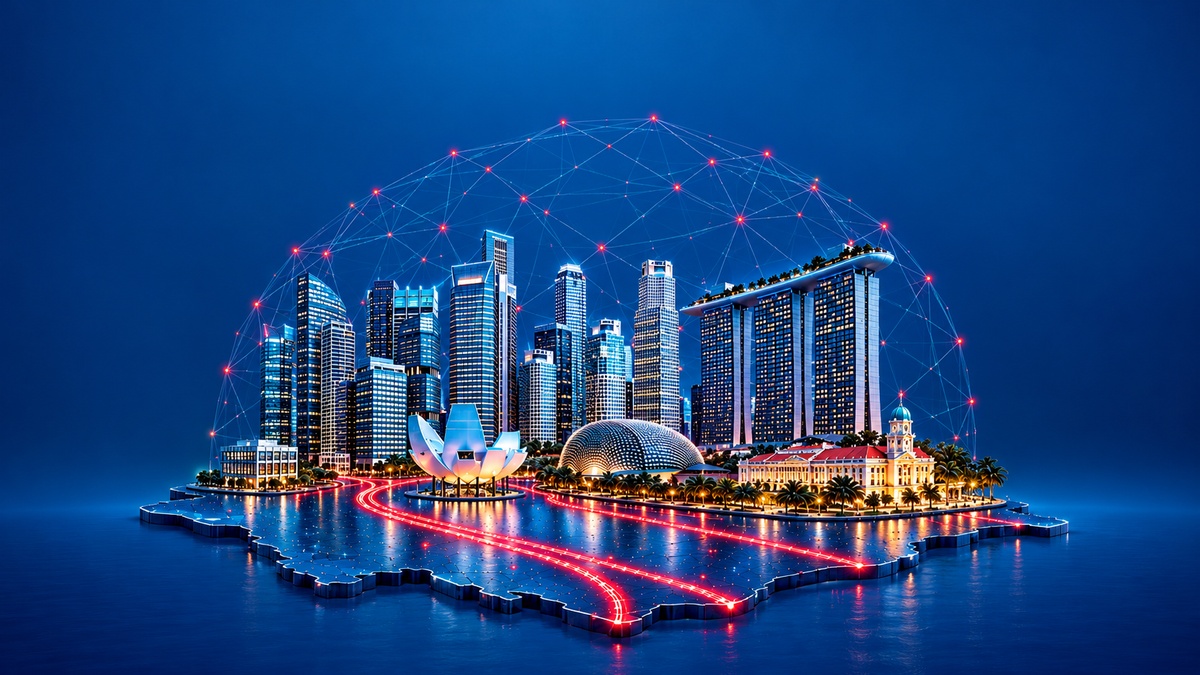
In February 2026, Singapore revealed that a highly sophisticated hacking group had used a previously unknown software flaw to break into parts of its telco networks. Stopping them from going any further took more than 100 cyber defenders working together. It was the largest cyber response in Singapore's history.
Incidents like this reflect one of several shifts in the threat landscape that Singapore's Cybersecurity Strategy 2026 sets out to address. Released by the Cyber Security Agency of Singapore (CSA) on 13th October 2026 at the Singapore International Cyber Week, the strategy outlines how Singapore plans to protect its digital economy over the next five years and marks a clear shift in thinking.
In this article, we break down the strategy's key takeaways and share our view on what it means for businesses in Singapore and across Southeast Asia.
Executive Summary
- Suspected attacks by Advanced Persistent Threat (APT) groups increased more than fourfold between 2021 and 2024, and these groups are now hiding inside networks and waiting for the right moment to strike.
- The strategy moves Singapore from strengthening resilience alone to proactively defending against threats before they cause damage.
- AI is described as essential for cyber defense, not optional, because AI-powered attacks will overwhelm traditional defenses.
- Higher risk organizations, such as Government vendors that manage critical systems, will be required to adopt cybersecurity standards like the Cyber Trust Mark and Cyber Essentials Mark.
- Under CSA guidance, critical infrastructure owners are expected to complete their move to quantum safe encryption by December 31, 2031. Other organizations are encouraged to finish by 2035.
- Cybersecurity is shifting from periodic checks and voluntary standards to continuous, provable protection. Businesses that wait for regulation to catch up will find themselves playing catch-up instead.
Why Singapore Refreshed Its Cybersecurity Strategy
Singapore launched its first national cybersecurity strategy in 2016 and refreshed it in 2021. Since then, CSA says the threat landscape has changed significantly, driven by four major developments.
1. Cyber Threats Are Becoming More Severe
The biggest shift is in who is attacking and how. Threats have moved from opportunistic cybercrime to long-running campaigns by APT groups, which are highly skilled, well-resourced attackers that typically act on behalf of states.
More worrying is what these groups now do once inside. Rather than simply stealing data, they position themselves inside critical infrastructure and stay dormant for long periods, waiting for the right moment to cause disruption.
In July 2025, the Singapore government revealed that UNC3886, a sophisticated APT group, was attacking high value targets. In February 2026, it confirmed the group had targeted Singapore's telcos using a zero day exploit and advanced rootkits to gain limited access to critical systems. A coordinated response involving more than 100 cyber defenders from government agencies, working closely with the telcos, stopped the group from going further.
2. AI and Quantum Computing Are Changing the Rules
CSA describes AI as playing three roles in cybersecurity: a threat, a tool, and a target. Attackers use AI to turn software flaws into working attacks faster and with less expertise. Defenders need AI to keep up. And AI systems themselves are becoming targets.
Quantum computing adds a longer-term risk. Future quantum computers could break the encryption that protects data today, which means data stolen now could be decrypted later.
3. Technology Dependencies Are Getting More Complex
Organizations increasingly rely on cloud services, open source software, AI models, and digital platforms built across many countries. A problem in one widely used technology can ripple across entire sectors.
The strategy points to the 2024 CrowdStrike outage as an example. A faulty software update affected an estimated 8.5 million Windows devices worldwide. In Singapore, airline check-in systems were disrupted and more than 100 departing flights at Changi Airport were delayed. It was not a cyberattack, but it showed how quickly one failure can spread.
4. International Cooperation Is Harder to Build
Cyber threats cross borders easily, so strong partnerships matter more than ever. Yet CSA notes that rising geopolitical tension and technology competition are making trust between nations harder to build, just when it is needed most.
Singapore's Cybersecurity Strategy 2026 at a Glance
The strategy is guided by one vision: a secure, trusted, and resilient cyberspace that empowers Singapore's digital way of life. It is built on four strategic pillars and two foundational enablers.
| Focus | Key initiatives | |
|---|---|---|
| Pillar 1: Defend Critical Infrastructure | Detect and stop threats to essential services earlier | National Cybersecurity Command Centre, Digital Defence Hub, threat detection tools for critical infrastructure owners |
| Pillar 2: Secure our Wider Cyberspace | Raise security across all businesses and individuals | Protective DNS, minimum standards for home routers, SPF Cyber Command, National Scams List |
| Pillar 3: Strengthen Capabilities for AI and Quantum | Use AI for defense and prepare for quantum threats | AI security guidance, AI defense tools, national quantum safe migration |
| Pillar 4: Enhance Resilience through Global Partnerships | Build trust with other nations and major tech firms | Singapore International Cyber Week, ASEAN cooperation, Counter Ransomware Initiative |
| Enabler 1: Build a World Class Cybersecurity Ecosystem | Grow local capability from research to market | Signature Programmes in AI and OT security, upgraded national testbeds |
| Enabler 2: Level Up our Cyber Workforce | Deepen and professionalize cybersecurity skills | Cybersecurity Professional Accreditation Framework, SG Cyber Talent |
The Key Takeaways From Singapore's Cybersecurity Strategy 2026
1. Singapore Is Moving From Reacting to Defending Ahead
The strategy is direct about the old way of working. It says traditional cyber defense relied heavily on periodic assessments and reactive responses, and that this is no longer enough against APT groups and AI-powered attacks.
In its place, Singapore is building national capabilities to spot and stop threats earlier:
- A National Cybersecurity Command Centre that combines threat information from Government, critical infrastructure owners, commercial security firms, and international partners
- Attack surface monitoring of critical infrastructure networks, so weaknesses are found before attackers find them
- Pilots of tools that continuously test security controls against simulated attacks
- Co-funding for critical infrastructure owners to adopt commercial network detection and response tools
- A review of the powers needed for preemptive action, such as proactive scanning and taking down malicious infrastructure
The message is clear. Security is no longer something you check once a year. It is something you watch and test all the time.
2. AI Is Now Essential for Cyber Defense
CSA states plainly that AI is no longer optional in cyber defense, because the speed and scale of AI-powered threats will overwhelm traditional defenses.
Interestingly, Singapore is not trying to build its own frontier AI models. Instead, it is focusing on using the best available models securely and building the software and workflows around them. Government tools already in use include:
- AEGIS, which discovers and maps exposed assets and vulnerabilities, including unknown and shadow assets
- JEWEL, which combines AI with human expertise to test complex web applications
- MAIA, which uses AI agents to speed up penetration testing of Government systems
- AETHER, a malware analysis tool that has been made open source
CSA has also published practical guidance for organizations adopting AI, including an Addendum on Securing Agentic AI and TR 147, a set of cybersecurity practices for applications built on large language models, both released in June 2026.
3. Cybersecurity Standards Are Becoming Requirements
This may be the most important takeaway for business leaders. Singapore is moving from encouraging good security to requiring it where the risk is higher.
- Government vendors that manage critical systems and sensitive data will be required to adopt standards such as the Cyber Essentials Mark or Cyber Trust Mark. Singapore will explore levers such as procurement rules to make this happen.
- Home routers sold in Singapore must meet at least Cybersecurity Labelling Scheme (CLS) Level 2 by the end of 2027, and similar requirements for IP cameras are being considered.
- The Cybersecurity Act and Cybersecurity Code of Practice will be strengthened, with a move toward more continuous, risk based supervision of critical infrastructure.
- Singapore will explore cyber insurance pilots that reward good security practices.
4. Your Supply Chain Is Part of Your Security
The strategy makes clear that a weakness in one organization can spread across many others. Critical infrastructure owners are expected to secure their supply chains, including making sure their suppliers and vendors meet baseline cybersecurity requirements such as the Cyber Trust Mark and Cyber Essentials Mark.
For businesses that sell to Singaporean organizations, this matters. Expect more security questions from customers, and expect them to ask for proof.
5. The Quantum Clock Has Started
Singapore has already set firm milestones for critical infrastructure owners to move to quantum safe encryption:
- By March 31, 2027: Submit quantum safe migration plans to CSA
- From January 1, 2028: Factor quantum safe considerations into new system purchases
- By December 31, 2031: Complete quantum safe migration for critical systems
Other organizations exposed to quantum risks are encouraged to complete their migration by 2035. That may sound far away, but CSA describes this as a multiyear transition, and the risk that stolen data could be decrypted later starts now.
6. Protection Is Moving Upstream
Singapore wants to stop threats before they ever reach users. The number of malware-infected systems detected in Singapore more than doubled in a single year, from 117,300 in 2024 to 284,300 in 2025.
To respond, the Government is building a national Protective Domain Name Service that will automatically block access to known malicious websites. The SPF Cyber Command, established on July 3, 2026, brings the police force's anti-scam and cybercrime capabilities under one roof. A new National Scams List will let Government, banks, telcos, and digital service providers share scam indicators faster.
7. People Remain the Decisive Advantage
Despite its focus on AI, the strategy calls human capital Singapore's decisive cybersecurity advantage. Technology can automate analysis and detection, but it cannot replace judgment, experience, or leadership during a crisis.
Singapore's cybersecurity workforce has grown from 4,000 professionals in 2016 to more than 10,000 in 2025. The next step is to deepen skills, not just add numbers. A new Cybersecurity Professional Accreditation Framework will set national standards for the profession, and CSA will offer cybersecurity training for the board members and senior executives of critical infrastructure owners.
What This Strategy Really Signals
Read as a whole, the strategy is less about any single initiative and more about a change in mindset. Here is what stands out.
A Clean Audit Is No Longer Proof of Security
For years, many organizations have treated cybersecurity as a calendar event. An annual penetration test, a yearly audit, a compliance checklist. Singapore's strategy openly says that model is no longer enough.
The reason is simple. When attackers can sit quietly inside a network for months, a test that passed last quarter tells you very little about today. The organizations that will be best protected are the ones that test continuously and watch continuously.
Watch the Procurement Lever
The most powerful part of the strategy may also be the quietest. When a government starts buying only from vendors that meet a security standard, that requirement does not stay with the vendor. It flows down to the vendor's own suppliers, and then to theirs.
This is how "voluntary" standards become the norm across an entire market. Businesses that serve Singaporean organizations, directly or further down the supply chain, would be wise to prepare now rather than when a customer asks.
AI Plus People, Not AI Instead of People
It is telling that Singapore's own AI security tools are built to work alongside human experts. JEWEL, for example, combines AI assistance with human expertise to find issues that automated scanners may miss. At the same time, the strategy calls people Singapore's decisive advantage.
This is a sensible blueprint for any business. The goal is not to replace skilled security professionals with AI. It is to give them AI tools that let them cover far more ground, far faster.
Singapore Is a Signal for the Region
Singapore will chair ASEAN in 2027, and the strategy names regional cybersecurity cooperation as a priority. Singapore has also been investing in regional capacity building for years through the ASEAN-Singapore Cybersecurity Centre of Excellence.
For organizations operating across Southeast Asia, Singapore's approach is a useful early indicator of where expectations are heading, both from regulators and from customers.
Where Cybersecurity in Singapore Goes From Here
Singapore's Cybersecurity Strategy 2026 paints a clear picture of where cybersecurity is heading. Threats are more patient and more capable. AI is speeding up both attack and defense. And security standards that were once optional are steadily becoming expected.
The organizations that will thrive are the ones that stop treating security as a periodic check and start treating it as a continuous capability, built on visibility, regular testing, and constant monitoring.
If you would like to understand how your organization measures up against the direction Singapore has set, contact us for a conversation.